We, the Drowned
A Danish seafaring town and its absent men, told in the collective voice of its people across a century
Chapter IAbout the book
- First published
- 2006
- Main genre
- Historical fiction
- Length
- 675 pages
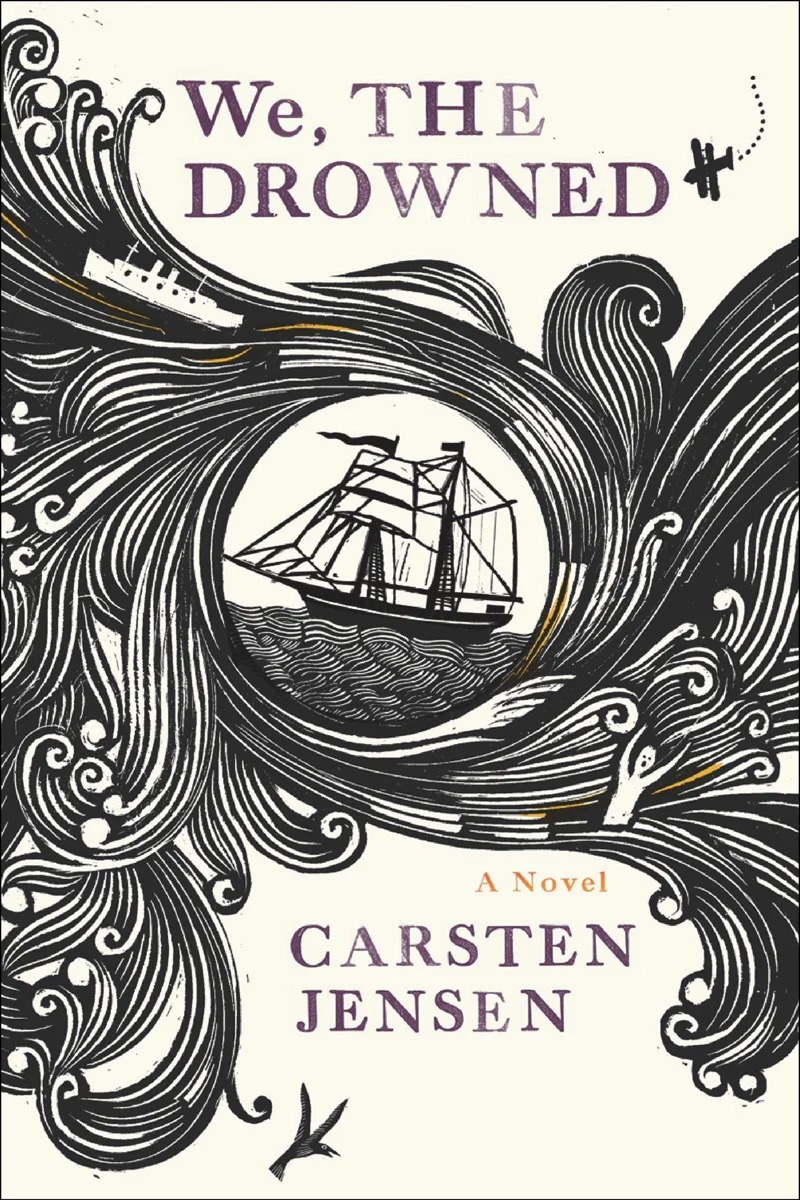
We, the Drowned is a century-spanning saga of Marstal, a port town on the Danish island of Ærø. A collective “we” narrates, speaking for the townspeople, and the story opens in 1848, when Danish sailors leave the island to fight the Germans. The novel spans four generations and two world wars, ranging from Denmark to America, Hawaii and the Congo. Its central figure is Laurids Madsen, a seasoned sailor and veteran of wars and long voyages, who struggles to adjust to life on land in middle age. The most sustained individual thread is Albert Madsen's quest for his missing father, told in extracts from his private journals. Kirkus describes the town as “a town of wives”, since the women left behind live in a state of permanent uncertainty while their husbands are away at sea for years. Real Danish historical figures mix with invented characters, and the English edition runs to 675 pages.
Chapter IIThe author and the making
Carsten Jensen is a Danish author and political columnist who began as a literary critic for the Copenhagen daily Politiken, and he had written a column for about three decades when his novel appeared in English. We, the Drowned was a bestselling Danish novel before its translation, which was made by Charlotte Barslund with Emma Ryder. Houghton Mifflin Harcourt published the English edition on February 9, 2011, and Harvill Secker published it in the UK. The book was a 2012 Dublin Literary Award nominee, put forward by Copenhagen Central Library in Denmark and a library in Poland. The reviewer K. E. Semmel called it Jensen's “fabulous first novel” and said it should change how readers think of Danish sea literature. Its voice is the plural “we” of Marstal, which gives, in Semmel's words, “a familiar sense of intimacy”. Kirkus compared it to Moby-Dick and The Tin Drum, writing that the novel descends from the first and looks to the second for inspiration. The story draws on the sea and on war: in one line quoted by a reviewer, “The sea respected our manhood. The cannons didn't.”
Chapter IIIHow it was received
Reviews of the English edition were warm. Kirkus called it a long, expertly told story, praised Jensen as a sympathetic storyteller with a sense of the absurd, and closed by describing it as an elegant meditation on life, death and the sea. K. E. Semmel, writing for Three Percent in April 2011, called it a rich, museum-like account of Marstal's history and noted that the book is 675 pages and begins in 1848, spanning about 100 years that take in the Three Years' War of 1848–51, two world wars, the decline of the sailing industry and globalization. Rachel A. Burns argued that Marstal itself is the real protagonist, more than any single man or voyage, and she noted that the women, though widowed, hold real influence. Semmel ends his review with “Whew. That's sure a lot”, a fair summary of the book's scale. The novel was a 2012 Dublin Literary Award nominee.
Chapter IVWhy it matters
We, the Drowned matters as a large, humane novel about what the sea takes from a community, told from the point of view of that community rather than a single hero. Its collective “we” turns Marstal into the protagonist, and its women, who hold real influence while the men are away for years, give the book a second centre. Kirkus's comparison to Moby-Dick and The Tin Drum signals its ambition. The reservations are practical. At 675 pages and with many characters across a century, it asks for commitment, and the combination of war, loss and drowning makes it a sombre read. It suits readers who enjoy long historical sagas, maritime fiction and a communal narrator, and it is a poor fit for anyone who wants a fast plot or a single central hero. Its translation by Charlotte Barslund with Emma Ryder brought a Danish bestseller to English readers, and the book earned a 2012 Dublin Literary Award nomination.
Chapter VIf you liked this
- Moby-Dick Herman MelvilleThe sea novel that Kirkus names as Jensen's ancestor
- The Tin Drum Günter GrassA European saga of war and community that Kirkus names as an influence
- Master and Commander Patrick O'BrianA long run of sea fiction with a strong sense of ship and crew
- Historical fiction
- Literary fiction
- War fiction
Buying links are coming soon.